

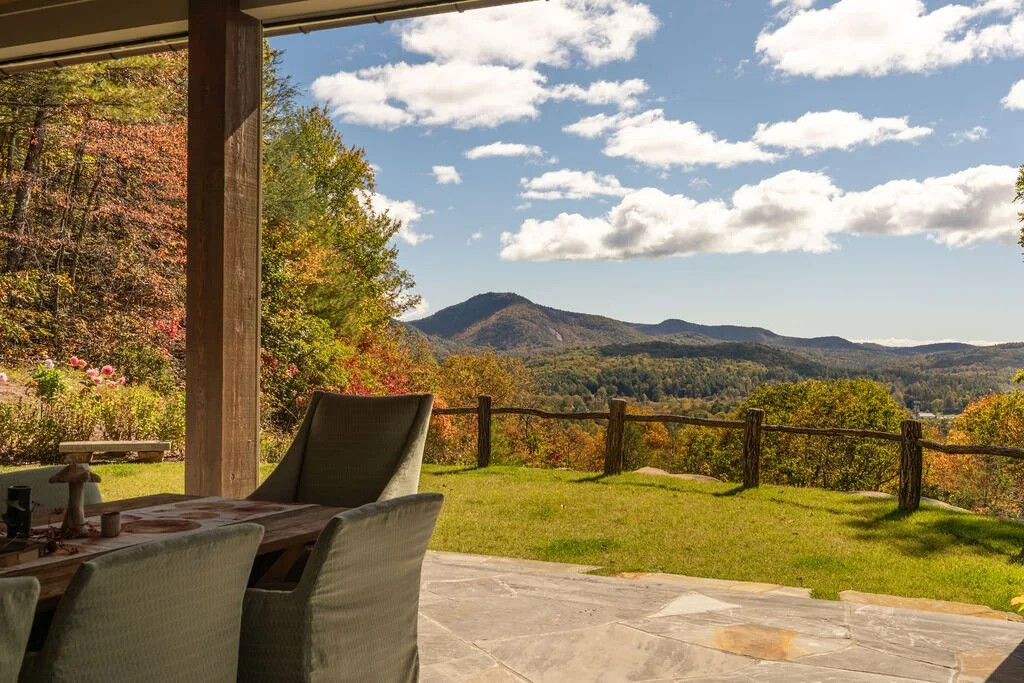
Some of the hardest conversations I have are with people who already own their land. They found a lot with a view they fell in love with, closed on it, and came to us ready to build, only to learn that the very thing that made the lot beautiful is also what makes it expensive and complicated to build on. It is not always bad news. But it is news that would have been far more useful before the purchase than after. If you are looking at land on the Highlands and Cashiers plateau, walk it with a clear head first, and know what you are looking at.
A listing tells you acreage, price, and maybe an elevation. It does not tell you whether the land wants a house on it. That answer lives in the ground, the water, and the access, and it is worth understanding before you sign.
How Much of It You Can Actually Build On
Acreage and buildable area are not the same thing. A five-acre parcel that falls away steeply from the road may offer only a modest bench where a house can reasonably sit. The rest is view, buffer, and slope. That is not a problem in itself, and some of the best homes I have built occupy a small, well-chosen footprint on a dramatic lot. But you want to know where the house can go before you buy, because the size and shape of that buildable area shapes everything the home can be.
Where the Water Goes
Cashiers is one of the wettest places in the eastern United States, and every lot here is telling a story about water if you know how to read it. Walk the land after a hard rain if you possibly can. See where it sheets across rock, where it pools, where it runs, and where the ground stays soft. A spring or a seasonal drainage crossing your building area is not necessarily disqualifying, but it will shape your foundation and may require engineered solutions. Water is patient and relentless. It is far cheaper to plan around it than to fight it later.
"A listing tells you acreage, price, and maybe an elevation. It does not tell you whether the land wants a house on it."
What Is Under the Soil
The plateau sits on granite and gneiss, and on many lots bedrock is not far down. Shallow rock affects your foundation, your driveway, your utility trenches, and your septic field, and removing it is one of the more expensive things that can happen on a site. You cannot always see rock from the surface, which is exactly why a soils investigation before purchase is worth the modest cost. Knowing whether you have two feet of workable soil or twenty changes the math on the entire project.
Water In and Waste Out
Most of the plateau is not served by municipal water or sewer. That means a well for water and a septic system for waste, and both depend on the land. A well has to find water at a reasonable depth, and a septic system needs soil that will accept it. In North Carolina, a site typically must pass a soil evaluation for an on-site wastewater system before it can be permitted, and a lot that cannot support a conventional field may require an engineered system or, in a hard case, may not perc at all. Confirm that a lot can be served before you assume it can be built on.
Getting To It, and Onto It
Access is easy to overlook and expensive to fix. How does the driveway reach the building site, and what grade does it have to climb? Is there a recorded, legal right of way to the parcel, or does access depend on crossing someone else's land? Where do power and utilities come from, and how far do they have to travel? A long, steep driveway and a utility run from a distant road are real costs, and they belong in your thinking before the land is yours, not after.
The Views You Keep, and the Rules You Inherit
A winter view through bare trees can close up completely once the deciduous canopy fills in from spring through fall. Understand what the view actually does across the seasons, and whether keeping it depends on clearing you are allowed to do. Many of the communities on this plateau also carry covenants and an architectural review process that governs what, where, and how you can build. Those standards exist to protect the character owners bought into, and I respect them, but you want to read them before you close so there are no surprises about setbacks, heights, materials, or timelines.
Bring a Builder Before You Buy
None of this is meant to talk anyone out of buying land here. This is some of the most rewarding country in the East to build in, and the right lot is worth finding. The point is simply that the questions worth asking are answerable, and most of them are cheaper to answer before the purchase than after. I am glad to walk a piece of land with someone who is considering it. An hour on the site, reading it honestly together, has saved more than one owner from a decision they would have regretted, and confirmed for others that the lot in front of them was exactly right.

Looking at a lot?
Before you close on land in Cashiers or Highlands, we are glad to walk it with you and give you an honest read on what it will take to build there.
Begin the conversation